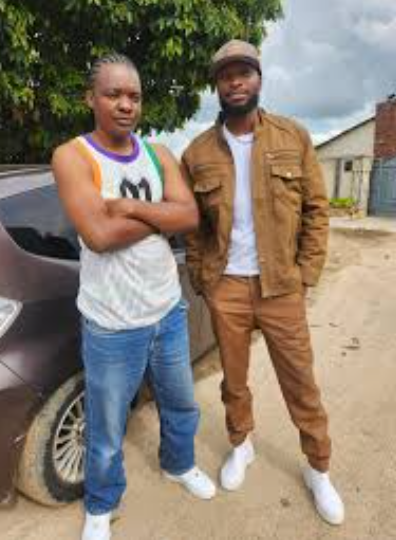
She is a pastor’s daughter from Harare with a voice that stops you, a presence that the camera cannot ignore, and a collaboration list that most artists spend five years trying to build. At 24, Elisheba Ropafadzo Sikireta is the closest thing Zimbabwe has to an artist who could do what Ayra Starr and Teni did on the continent. The gap between where she is and where she could be is not a talent gap. It is an infrastructure gap. And it is getting smaller.
Let’s start with the comparison, because it is not a casual one.
Ayra Starr was 19 when her debut EP dropped on Mavin Records in 2021. She had the look, the voice, the production behind her, and an identity that was specific enough to be recognisable and open enough to travel. She became one of the defining voices of Nigerian pop within eighteen months. Teni came before her, a different kind of artist, bigger physically, bigger in personality, the kind of performer who makes everyone in the venue forget about everyone else by sheer force of presence. She had a voice that did not need a studio to be compelling. You could hear it raw, stripped of everything, and it still held you.
Put those two descriptions next to what we know about Xiba and the comparison is not flattery. It is an honest read of the available evidence.
Elisheba Ropafadzo Sikireta is 24 years old. She was born to a pastor, grew up thinking she would be a lawyer, and found music instead. She spent formative career years inside Samanyanga Sounds, Holy Ten’s label, one of the most credible creative environments Zimbabwe’s hip hop scene has produced in this decade. She worked alongside some of the most serious young artists in the country. She left amicably, chasing full creative control, which is the choice of someone who knows what they want and is not afraid of the work required to get it.
She has a voice that is genuinely different from what this market produces regularly. Not just technically capable, not just in-tune and competent. A voice with a character. You hear it on My Feelings with Holy Ten and it does not disappear into the track. It holds its own beside one of Zimbabwe’s most dominant artistic voices. You hear it on Kana Ndada with Saintfloew and it adds something warm and specific that the song would be fundamentally less without. You hear it on Bhiya with Killer T and it elevates a Zimdancehall record from a good Killer T song into something with cross-genre appeal.
That range is not accidental. She has said clearly that she enjoys exploring afro-fusion, traditional Shona music, gospel and jazz. She wants genres that have “emotions and soul” which she can express through her voice. She is not describing a commercially calculated strategy. She is describing a genuine musical character. Wide, curious, emotionally driven. The same description you would write about Teni in 2018 or Ayra Starr before the Mavin machine refined her into a pop identity.
The pedigree that does not get talked about enough
This part matters and is often missed in conversations about Zimbabwe’s emerging female artists.
Samanyanga Sounds is not just a record label. It is the label that housed Holy Ten at the height of his cultural influence. Being signed there, being selected for that environment, being the female voice they brought into their creative circle, that selection process is itself a credibility signal. Labels with that level of artistic seriousness do not sign people who cannot hold the room.
Her collaboration list reads like a catalogue of who was relevant in Zimbabwe’s music scene across a three-year window. Saintfloew for Jumanji, an artist who later signed a distribution deal with Virgin Music Group South Africa, a subsidiary of Universal Music Group. Holy Ten for My Feelings, the artist many consider the defining voice of his generation in ZimHipHop. Andy Muridzo for Butterfly, one of the most popular traditional-leaning artists in the current market. Ndunge Yut for Bokola. Killer T for Bhiya, one of Zimbabwe’s most consistently successful live and commercial performers. Young Gemini for Munhu Wandakada and the Location compilation.
Each of those collaborators chose to have Xiba on their record. The artist servicing the feature spot has no control over who gets called. When multiple artists of that calibre call the same person across different projects, that is the industry telling you something about her. Not with words. With decisions.
Bhiya with Killer T, released November 2025, produced by Chiweddar, is perhaps the most commercially significant of those collaborations. The song blends Zimdancehall with afrobeat in a way that gave both artists crossover reach. Xiba’s contribution was described specifically as injecting “invigorating energy” and adding “a smooth, uplifting layer.” Those are not generic compliments. That is a review identifying what she uniquely brought to the song.
Her presence on a track is not decorative. It changes the song.
Ndezvenyu, and what it tells us about how much more is there
Ndezvenyu was released January 14, 2026. In Shona the title means something close to “it’s yours.” The song carries smooth melodies and emotional Shona lyrics. The music video was directed by SAP with wardrobe designed and tailored by Designer Jay Tee. On Audiomack it accumulated 12,800 plays.
It is a good song. A comfortable, listenable record that does what it is supposed to do.
And that is exactly the point.
Because when you have heard My Feelings with Holy Ten, when you have heard what her voice does on Kana Ndada, when you have felt the presence she brings to Bhiya, a comfortable and listenable record is not the ceiling. It is a floor. It is not that Ndezvenyu falls short. It is that Xiba has already shown us she can go higher, and once you have seen that, you cannot unsee it.
She said it herself: “I aspire to be a strong and powerful voice for women in my country. I hope to use my voice and music to inspire women and girls to reach their full potential while working towards creating a just and equal society.” Those are not marketing words. That is an artist who already knows what she is building toward. An uplifting vision. A purposeful one. A vision with the kind of depth that builds careers that last rather than moments that peak.
When she operates from that place, the music sounds completely different. My Feelings is not just a good feature on a Holy Ten record. It is an artist showing her full emotional range on one of the biggest platforms in ZimHipHop without hesitation. Kana Ndada adds something warm and irreplaceable to a SaintFloew record. Bhiya turns a Killer T song into a cross-genre moment. Those contributions are not the work of someone finding her feet. Those are the contributions of an artist who knows exactly what she is carrying and delivers it with precision.
Ndezvenyu is the sound of someone making a good song. Her best work is the sound of someone making her song. The distance between those two things is not a weakness. It is untapped potential. And at 24, with the foundation she has already laid, that potential is entirely within reach.
What the Africa-level argument actually means
Teni did not break out because she sounded like what Lagos was producing in 2018. She broke out because she sounded like herself, loudly and without apology, until Lagos came around to where she was. Her debut single Case had 70 million YouTube views and made her one of the most-streamed Nigerian artists of that year. She was different. Her weight, her personality, her refusal to conform to what the industry expected a female pop star to look and sound like. None of that was a weakness. All of it was the brand.
Ayra Starr’s trajectory was more traditionally manufactured but the core principle was the same. Mavin Records identified a specific artistic identity and built everything around it consistently. The aesthetic, the sound, the collaborations, the rollout. Her debut album Nineteen and Dangerous was coherent. Every piece of it pointed in the same direction. That coherence is what allowed her to graduate from Nigerian pop to continental pop to global conversation in under two years.
At the Africa level, the artists who cross over are not necessarily the most technically gifted. They are the most legible. The listener in Nairobi or Accra or London who does not know Zimbabwean music needs to understand immediately who they are listening to and why it matters. That clarity comes from brand identity, sonic consistency, and the confidence to stay in your lane even when something else looks more commercially attractive this week.
Xiba has the raw material for that kind of legibility. She has a voice that is distinctive enough to be recognisable across genres. She has a face and a presence that the camera engages with naturally. She has a story, the pastor’s daughter who chose music over law, who built her career from inside one of Zimbabwe’s most creatively serious environments, who left a label for independence because she needed full creative control. That story is more interesting than most artist biographies in this market.
What is missing is the consistent execution of an identity that is specific enough to travel. Not just a great feature. Not just a good song. An artist whose name you search for because you want more of whatever that was.
What she said about herself
In her NewsDay interview she said something that matters more than any press quote: “I aspire to be a strong and powerful voice for women in my country. I hope to use my voice and music to inspire women and girls to reach their full potential while working towards creating a just and equal society.”
She also said she was interested in collaborating with female artists from across Africa, that she believed bringing together different styles and voices from the continent could create something unique and powerful.
Those are not the words of someone who wants to make dancehall records for the festive season. Those are the words of an artist with a genuine vision for what their work should accomplish. An artist who understands that music can be more than entertainment. That it can carry something.
The artists who travel at the continental level all have a version of that sense of purpose. Burna Boy has it. Teni has it. Ayra Starr has it. It is what separates an artist who has international hits from an artist who becomes an international presence.
Xiba has it. The question is whether her output is consistently being shaped by it.
What this talent deserves and what comes next
The talent is not the variable here. That is settled. The collaborations settle it. The vocal performances settle it. Every track where she shows up fully, My Feelings, Kana Ndada, Bhiya, settles it beyond any reasonable doubt.
What sits ahead of her is a question of platform, infrastructure, and the moment when everything that she already is gets pointed in one consistent direction.
At 24, with the pedigree she has built and the collaborations she has accumulated, Xiba is exactly the kind of artist that a serious management team builds a continental strategy around. Not eventually. Now. The window for a Zimbabwean female artist to make a genuine case at the African level is open. Amapiano proved that southern Africa can export sounds the world has never heard before. Tyla proved that a girl from this part of the continent can win a Grammy on her own terms. The industry is actively looking in this direction in a way that was not true five years ago.
What Xiba needs is not a reinvention. She does not need to become someone else or chase a sound that does not belong to her. She needs the infrastructure that amplifies who she already is. Management that is working Lagos and Johannesburg rooms with her name. Consistent creative direction that lets every release build on the last one rather than starting fresh. And the one song that says everything at once. Not a great feature on someone else’s record. Her record. The one where everything specific about Elisheba Ropafadzo Sikireta comes together in one piece of music that nobody else in Zimbabwe could have made.
She has been inside that song before. My Feelings with Holy Ten came close. Kana Ndada came close. She knows the register. She knows what her voice can do when the production gives it the space it deserves. The next step is making that record on her own terms, as the lead, with the full weight of her story and her vision and her purpose behind it.
The Teni Case moment. The Ayra Starr Away moment. Every artist who crosses over has one. One song that makes the continent stop and ask who that was.
Xiba has everything required to make that song. The voice. The presence. The story. The pedigree. The sense of purpose that makes music last beyond the season it drops in. Most artists spend entire careers trying to manufacture one or two of those ingredients.
She already has all of them. The song is waiting.
HOT100 Zimbabwe is Zimbabwe’s national music ranking and music intelligence platform. All factual claims in this article are drawn from verified published sources including NewsDay Life and Style, Gossip Maestro, ZimTainment, CitiMuzik, Shazam, Apple Music, Audiomack, and YouTube. The assessment of Xiba’s artistic potential represents HOT100’s editorial opinion, not reported fact.