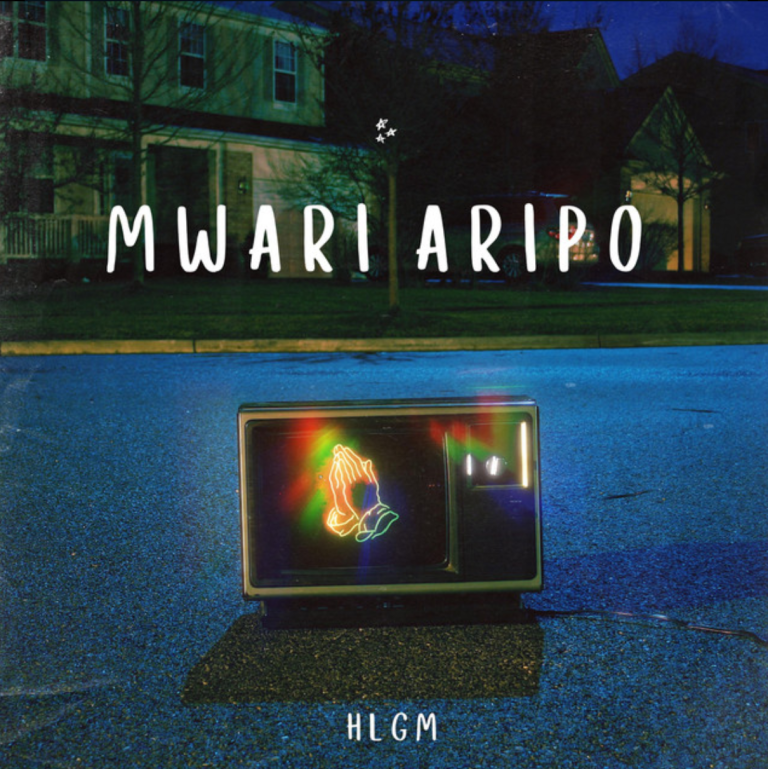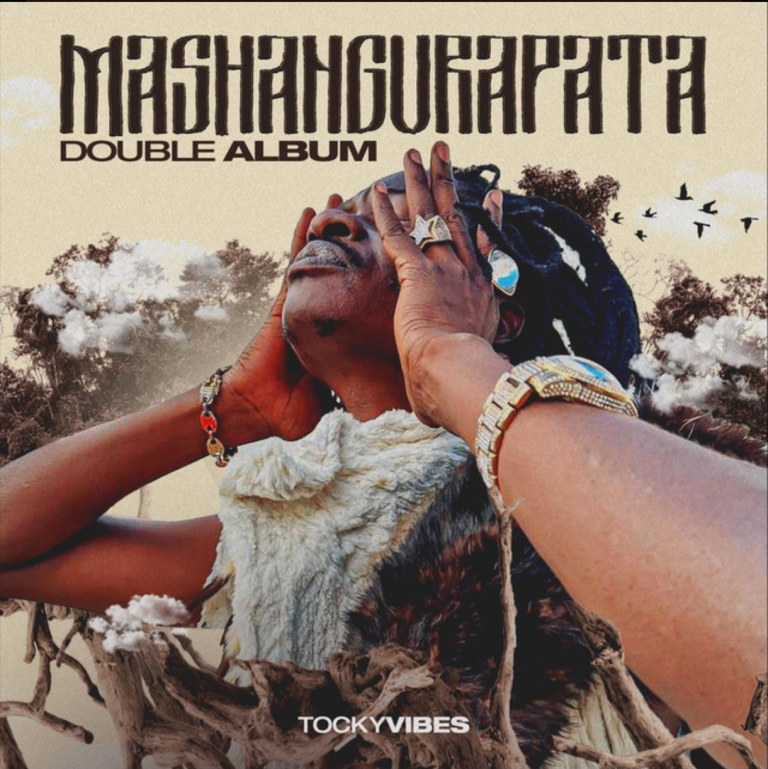
Two of Zimbabwe’s most original artists walked away from sounds they built. One for a year. One for a moment. Neither fully got back to where they were.
In July 2024, Baba Harare sat down at a barber’s chair and let someone cut off his dreadlocks.
If you know anything about how artists build their public identity in Zimbabwe’s music scene, you understand that this was not just a haircut. The dreadlocks were part of the brand. They were part of the visual language that made Braveman Chizvino immediately recognisable on a festival poster, on a YouTube thumbnail, on a WhatsApp status. When the clippers came out, the announcement that followed was not really a surprise anymore. He had already said it with his head.
He was done with Jiti. Done with Guzuzu and Ramba Wakadzvanya and The Reason Why and all the songs that had built him into what most people in this industry were calling the king of the genre. He was giving his life to Christ. His name was no longer Baba Harare. His name was King David.
The reaction across Zimbabwe’s music community was immediate and loud and divided. His fans didn’t know whether to be supportive or devastated. His bandmates complained publicly that he had left them without warning. Speculation filled every comment section in the country about what had really happened, who had really changed his mind, and whether any of this was permanent.
Then, fourteen months later, he was back at Jongwe Corner with a new album, a packed crowd, and the declaration: “I am back for business.”
So what actually happened in between? And more importantly, what did it cost?
Who Baba Harare was before July 2024
This part is important because it is easy to discuss the gospel detour without properly establishing what was at stake when it happened.
Braveman Chizvino was born on 22 December 1988 in Bikita. He came to Harare the way many do, chasing something the rural area could not give him. Jah Prayzah found him working with Sigma Boys, a relatively unknown outfit from Bikita, and brought him into the Third Generation band as a guitarist and backing vocalist. That exposure gave him the professional foundation. The national shows and tours with one of Zimbabwe’s biggest artists put him in rooms and in front of audiences he would never have reached on his own.
In 2017 he went solo. His debut album Chikwama Changu was the beginning. What followed was one of the most consistent runs of output any artist in his space had managed. Minamato Yemarasta. Ramba Wakadzvanya. Izvi Zvinoitirwei Izvi. Generator. Vaccine. Zimbabwean Giant in 2022, which was his seventh production at the time of its launch. Prove Them Wrong in 2023. Album after album, year after year, launched at Jongwe Corner in Hatfield with crowds that kept growing.
The Reason Why, known to everyone who has been to a Zimbabwean party in the last decade as Hat Dzemurara, became his signature. Guzuzu became a crowd call. Stumbo, Rita with Mai Titi, Ndine Hombe. His YouTube channel crossed 210,000 subscribers. He was described in November 2022 by NewsDay as having “churned out hit after hit” and was headlining his own album launches with USD entry fees at a time when most artists were performing for free just to build a following.
He was, by any reasonable measure, at or near the peak of his career. Jiti was not the biggest genre in Zimbabwe. ZimDancehall still dominated the primary conversations. But within his genre, Baba Harare was not one of several voices. He was the voice. When journalists and industry people described Jiti in 2023, they described it in relation to him.
Then he cut the dreadlocks.
What the gospel year looked like
The announcement came in June and July 2024. He shocked everyone, in the words of The Herald’s February 2026 profile, by announcing he was dumping the genre that had shaped his music career. The dreadlocks went. The name Baba Harare was set aside, at least publicly. King David took over.
He released a gospel album called Repentance, featuring collaborations with Takesure Zamar Ncube, Cymlex, Fire Max Chimambe, and Spiwe Ndebele. A second project, My Testimony, followed on 5 October 2024. A third, Revived and Restored, came in 2025. He performed exclusively at gospel events for approximately twelve months.
The Standard reported that his early gospel tracks Sukai and Makanaka were climbing the YouTube charts and that fans had “embraced” the new music. He said in that same period that he was grateful for the support and prayers that had guided him through the process, and described the love for Repentance as “incredible.”
But there were signs from the beginning that the gospel community and Baba Harare were not fully compatible partners.
He was doing events where promoters expected him to perform without payment, or for fuel money only, and then disputed even that. He performed at one church event where he requested USD 200 for fuel and expenses and described being met with ridicule when he followed up on the agreement. He wrote on Facebook that he had never experienced a payment dispute in his secular career in all his years of performing. The gospel industry gave him his first one almost immediately.
He wrote publicly, and these are his own words documented by Nehanda Radio and The Standard in September 2025: “From a ministerial perspective, gospel concerts are powerful. They spread the Word, they win souls, and they glorify God. But from a business perspective, it’s a different story. Often, people hide under the idea that because you’re ministering for the Kingdom, payment shouldn’t matter. But let’s be honest: I am not only a Christian, I am also a human being and an artist. This is my work, my livelihood, and I need to survive beyond the stage.”
He also advised young artists directly. He said he would not advise any upcoming artist to rely exclusively on gospel shows.
This is a significant statement coming from a man who twelve months earlier had cut his dreadlocks on the way to becoming a gospel artist. Something in the experience had changed his assessment fundamentally, and he was not being quiet about what that something was.
The return and what the numbers showed
In September 2025 he announced on social media that he was done with gospel and returning to Jiti. The gospel community’s response was swift. He was removed from the Hallowed Conference lineup, a gospel event scheduled in Johannesburg in November 2025. The organizers described his return to Jiti as incompatible with the event’s gospel focus and cited the Shona word “zvepanyika” which loosely means things of the world, as the reason for the removal.
He went on Facebook and expressed disappointment but said he respected their decision. He also clarified, in a statement that has been widely reported, that his criticism was directed at the gospel music industry and its exploitative tendencies, not at Christianity itself. “Being a Jiti artist does not make me less of a Christian than someone who solely sings gospel music,” he said.
Then he launched Greater and Wiser at Jongwe Corner. A five-track project. The launch was packed. The ZBC reported that he had silenced the skeptics. Polaris ZW confirmed that two songs off the album, 9 Months and Couple of the Year, hit 100,000 YouTube views each within 24 hours of release.
100,000 views in under 24 hours is a real number. It suggests the audience had not evaporated during the twelve months he was away. They were still there. They were waiting.
But here is the question that the numbers alone cannot answer: where would those numbers have been if he had never left?
By the end of 2023, Baba Harare was releasing his seventh studio project. He was arguably at the height of his commercial momentum. His booking fees were real. His live show drawing power was real. His streaming numbers were building across a back catalogue that went deeper every year. The pipeline he had built through consistent output since 2017 was working.
He stepped away from that pipeline in the middle of it running. Not at the end of a career. Not after a downturn. At what looked from the outside like the best moment he had had commercially. And when he came back fourteen months later, the momentum had to be rebuilt rather than continued.
Calvin Fero had happened in that window. Paddington Chiwashira’s Manhanga Matete had happened. Baba Gweru had built an audience. Jiti had not stood still waiting for its king to return. The genre that Baba Harare had done more than anyone to elevate had kept moving, and other voices had stepped into the space the departure created. Whether any of those voices would have found as much oxygen if Baba Harare had been present and releasing is a question the industry quietly debates.
The Herald noted in its February 2026 profile that new Jiti acts were gaining popularity specifically during the period of his gospel absence. This is not an accusation. It is an observation about what happens to a genre when its most recognisable voice goes quiet at the wrong time.
Why the fans didn’t receive it
This is perhaps the most human part of the story and the one that is least discussed openly.
Zimbabwean music fans are not anti-faith. The country is deeply religious. Church attendance is high. Gospel music has its own committed and commercially significant audience. This is not a population that would reject a musician for becoming a Christian.
What the fans struggled with is more specific than that. And a Facebook commenter named Innocent Mtonga, quoted by iHarare in September 2025, articulated it more precisely than most industry observers had managed to: “You can do both Christian and secular music, just like the great Oliver Mtukudzi, who gave us songs like Pfugama Unamate and even a full gospel album. Shifting completely was almost career suicide.”
Mtukudzi is the reference point here and it is the right one. Tuku was a Christian. He was a deeply committed Christian. He talked about his faith openly and without apology throughout his career. And he never stopped making the music that his audience had built their love for him on. His faith informed his art without replacing it. He didn’t ask his audience to follow him into a completely different genre and then come back when the new genre didn’t work out commercially.
Another commenter named Tracey Makoni, also quoted by iHarare, offered a different angle: “Don’t burn the bridges. Diplomacy wins each time.” Her reading of the situation was that the way the departure was handled, the dramatic haircut, the name change, the public rejection of the genre he had built, made the return harder than it needed to be.
This is worth sitting with. If Baba Harare had said in July 2024: I am deepening my faith and exploring gospel music as one part of my creative journey, the conversation would have been entirely different. The audience would have followed him into a gospel project with curiosity rather than confusion. He would have retained his Jiti identity while expanding his creative space. Tuku’s model. Leonard Zhakata’s model, a bishop who still performs in bars and has never lost his secular following. The model was available to him.
Instead, the choice was total. The dreadlocks. The name. The public rejection of Jiti as a previous life he was moving away from. When you make a total break and then return, you are asking the audience to do something quite difficult: to follow you out, and then to follow you back, without losing faith in your sense of direction.
Some of them did it. The 100,000 views on two songs within 24 hours of the Greater and Wiser launch prove that. But some of them had quietly filed him under artists who had lost their way, and winning those people back takes more than a packed Jongwe Corner and a good five-track project.
What he should have done and whether it was fair to ask it
This is where the analysis has to be honest about the full complexity of the situation, because there is a version of this story where the question “what should he have done” is not entirely fair.
Baba Harare did not go gospel because it was commercially smart. Nobody looks at the economics of Zimbabwe’s gospel industry and concludes it is a more lucrative space than Jiti for an established secular artist. He went because something happened in his personal life, most likely connected to his new relationship, that changed his relationship with his faith in a real and felt way. The haircut was not a marketing strategy. The name change was not a rebrand exercise. Something was genuine there, even if the manner of the announcement created commercial difficulties.
The question of whether his career considerations should have constrained a genuine spiritual change is not an easy one. His bandmates felt abandoned. His fans felt confused. The industry lost its most visible Jiti voice at a pivotal moment for the genre. Those are real costs with real consequences.
But the question of whether an artist who has had a genuine spiritual experience should be expected to manage that experience in a commercially optimal way is a different kind of question. One that has no comfortable answer.
What can be said with more confidence is that the manner of the departure created problems that a different manner would not have. The total break, the dreadlocks, the name, the public rejection of Jiti, created a drama that a more considered communication strategy would not have generated. Whether that was possible given the emotional state he was in at the time, only he knows.
What the industry can learn from it is separate from the question of what was fair to ask of him as a person.
Tanto Wavie and the shorter version of the same story
Tanto Wavie’s situation requires a different kind of treatment because it is not quite the same story, even though the parallels are real enough that they belong in the same conversation.
Born Shingirai Makaza on 19 September 1997 in Zengeza, Chitungwiza, Tanto Wavie built his early reputation on creative mischief before he built it on music. In 2018 he pulled what Zvigaba described as one of the best trolling gimmicks in Zimbabwean entertainment, launching himself into visibility through a combination of genuine musical skill and calculated social media provocation. He received a Best Newcomer nomination at the 2018 ZimHipHop Awards.
Then Sungura Museve arrived in August 2021 and changed the conversation entirely.
The album became the second most streamed ZimHipHop project in Zimbabwe on Audiomack, recording over 111,000 streams on that platform alone, and 62,728 streams on Spotify. Only Holy Ten’s Risky Life was ahead of it. The Yaad Universe documented the community’s reaction when Sungura Museve was not nominated at the 2021 ZimHipHop Awards despite its streaming numbers, calling it one of the most appreciated ZimHipHop projects of the year. The community asked publicly how authentic the awards board was. Tanto Wavie himself responded, saying he didn’t make music for awards and was focused on building TrapSu as a sound and legacy.
Sungura Museve 2 came in November 2022. Amasungura in 2022. Amasungura 2 in November 2023. He was releasing music consistently, developing the TrapSu concept across multiple projects, building a catalogue with a recognisable sonic identity that nobody else in ZimHipHop was building.
Then, at some point around the end of 2024 and the start of 2025, something shifted. On his X account, he posted: “2025 is a new chapter. I’m done with secular music. I’ve given my life to Christ. Gospel only from now on. Watch God work.”
This was a significant public declaration. But what happened next was different from what happened with Baba Harare. Tanto Wavie did not cut his hair and change his name and release a gospel album. Within weeks and months of that post, he was releasing secular ZimHipHop again. Xari Magitari in January 2025. In the Morning in February. Salam Maleko in April. The Rudo Ibofu 2 EP in 2025. The gospel declaration, whatever it represented personally, did not translate into a year-long departure from the genre the way Baba Harare’s did.
The ZimSphere review of the Vatsvunhi Vazvo Kwazvo EP in April 2026 doesn’t primarily frame Tanto Wavie’s challenges around a gospel detour. The framing is broader than that. “Tanto Wavie has not reached the heights he ought to have reached. Talent isn’t the issue. It’s never been. Tanto is still really good. That’s clear across this project. But he isn’t scaling the way people expected him to.”
The comparison to Mugaratia, once his mentee and now arguably at a higher trajectory, is the sharper observation. Not that a brief spiritual declaration derailed his career, but that something about the scaling, the platform, the event bookings, the mainstream presence, has not followed the quality of the music.
Whether the brief gospel period contributed to that gap, or whether it reflects other structural challenges that were already present, is a question the evidence doesn’t definitively answer. What can be observed is that two artists who both publicly stepped toward gospel music in roughly the same period had careers that were already facing questions about trajectory and momentum. Whether those declarations were expressions of genuine faith, responses to professional frustration, or some complicated combination of both, is not something anyone outside their own heads can claim to know.
The question Zimbabwe’s music industry needs to answer
What both stories raise, and what the industry almost never discusses honestly, is the question of what an artist owes their audience when their personal life changes.
There are commenters on every article about Baba Harare’s gospel year who say he had every right to follow his faith wherever it led. They are not wrong. There are others who say he misread the market, mishandled the communication, and paid a commercial price for choices that a wiser manager or a cooler head might have avoided. They are also not entirely wrong.
The more interesting question is whether Zimbabwe’s music industry has any support structures for this situation. What does an artist do when a genuine personal change pulls them away from the sound that feeds them? Mtukudzi navigated it. Leonard Zhakata navigates it. But both of them, it should be noted, were never faced with the pressure of having built their entire public identity around a genre that carries specific cultural associations and lifestyle signals the way Jiti does.
Jiti is not an ambivalent sound. It is music for gathering, for celebration, for the dance floor. When Baba Harare cut his dreadlocks and changed his name and rejected Jiti’s stage, he was not just announcing a new musical direction. He was publicly rejecting a cultural identity his audience had invested in alongside him. The return, however warm the reception at Jongwe Corner, carries that history with it.
The nine-track Repentance album, the My Testimony project, the Revived and Restored collection, those exist now. They are part of his discography. When listeners look at his catalogue in five years, they will see a gap. Not just a musical gap, but a narrative gap that requires explanation every time a new listener discovers him. That explanation, by itself, is a cost.
The question of whether the cost was worth it is one only Baba Harare can answer. He has been consistent since his return in saying that the year taught him something, that the discipline of gospel has given him greater depth as a performer and storyteller, and that faith and Jiti are not mutually exclusive things for him. Only his music in the coming years will show whether that depth is audible. The early signs from Greater and Wiser were strong enough to suggest the audience that mattered most was prepared to receive him back.
But prepared to receive is different from picking up exactly where he left off. That distinction, more than anything else in this story, is the thing that the industry should sit with.
Because in Zimbabwe’s music scene, momentum is not a pause-and-resume situation. It is a river. If you step out of it for long enough, the current moves. And when you step back in, you are downstream from where you left.
The numbers that are missing
One important point that has to be made clearly, because this is a journalism exercise and not a gossip column: specific streaming numbers for Baba Harare’s gospel projects compared to his Jiti projects before the transition are not publicly available in a form that allows a precise before-and-after comparison.
What can be confirmed is that his YouTube channel stood at over 210,000 subscribers before the transition. What can be confirmed is that his return songs 9 Months and Couple of the Year each hit 100,000 views within 24 hours of release, which The Herald described as a testament to his musicianship. What cannot be confirmed is exactly how his gospel releases performed relative to his late secular catalogue, because none of the published sources provide those specific comparative figures.
Any article that claims to give you precise numbers on what the gospel year cost Baba Harare in streams or bookings is working with estimates rather than verified data. This is not that article. What this article can tell you, based on verified reporting from The Herald, The Standard, ZBC, Nehanda Radio, ZimEye, and multiple other sources, is that the market sent him a clear enough signal during those twelve months that he felt it necessary to return, and that the return itself was received warmly enough to suggest the damage was real but not permanent.
What the permanent damage actually looks like will only become clear over the next two to three years of Jiti releases, booking patterns, and chart performance.
The HOT100 will be watching. Every Friday.
HOT100 Zimbabwe is Zimbabwe’s national music ranking and music intelligence platform. This article forms part of the HOT100 cultural intelligence series. Quotes from Baba Harare cited in this article are drawn from verified published interviews with The Standard, Nehanda Radio, The Herald, ZBC News, and iHarare. The Tanto Wavie X post cited is drawn from his verified public Twitter/X account. The ZimSphere quote on Tanto Wavie is from their April 2026 EP review of Vatsvunhi Vazvo Kwazvo.